
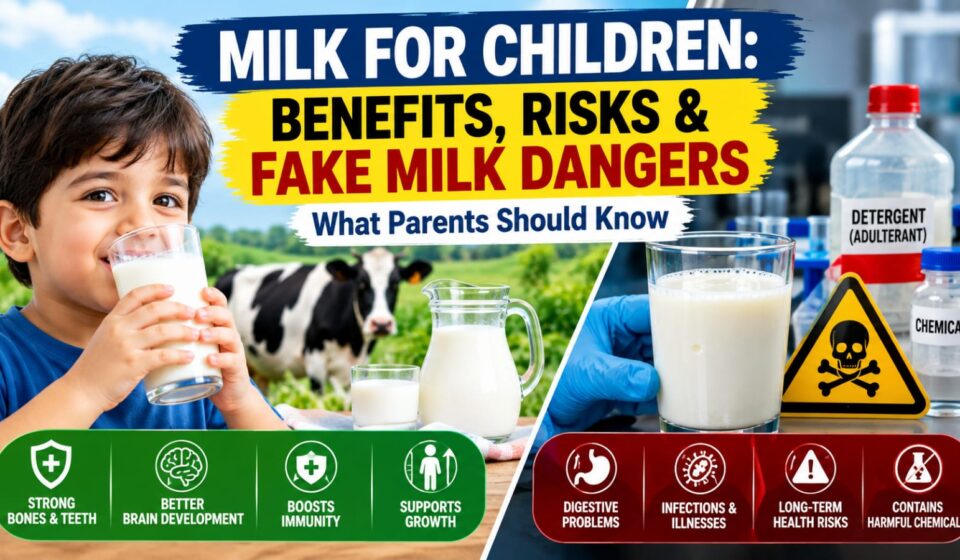

New Delhi: Milk is an important food in many children’s diets because it provides nutrients such as protein, calcium and other essential nutrients. However, parents should also understand that milk is not a substitute for a balanced diet, and the quality and safety of the milk being consumed are equally important.
For infants, milk choices require special care. The World Health Organization recommends exclusive breastfeeding during the first six months of life, followed by continued breastfeeding along with safe and nutritionally adequate complementary foods.
Why Milk Can Be Beneficial for Children
Milk can contribute to a child’s overall nutrition by providing protein and minerals such as calcium. These nutrients are important for normal growth and the development and maintenance of bones and teeth.
Milk and other dairy products can form part of a balanced diet for children. However, children also need a variety of foods, including fruits, vegetables, grains, pulses and other nutrient-rich foods. WHO guidance notes that milk can be included among foods from animal sources in a healthy diet for children.
Possible Problems With Excessive Milk Consumption
Although milk can be nutritious, giving children very large amounts may not be appropriate for every child. Excessive milk intake can reduce appetite for other nutritious foods and may make it harder for children to maintain a varied diet.
Some children may also have difficulty digesting lactose or may have a milk allergy. Parents should speak with a healthcare professional if a child repeatedly develops symptoms such as stomach pain, diarrhoea, vomiting, rashes or breathing problems after consuming milk.
The right amount of milk depends on the child’s age, overall diet and individual nutritional needs.
What Is Adulterated or “Fake” Milk?
The term “fake milk” is commonly used for milk that is deliberately produced or altered using substances that are not permitted in milk. Such products should not be confused with properly manufactured dairy products or infant formula.
Food adulteration can reduce nutritional quality and may create health risks. FSSAI explains that adulteration can involve adding inferior or unwanted substances or removing valuable components from food.
In its National Milk Safety and Quality Survey, FSSAI reported that a small number of tested milk samples were adulterated, including samples containing substances such as hydrogen peroxide, detergents, urea and neutralizers. The survey also identified other safety concerns, including aflatoxin M1 and antibiotic residues above permitted limits in some samples.
What Are the Dangers of Adulterated Milk?
The health effects depend on the substance used and the amount consumed. Adulterated food can cause problems ranging from digestive disorders and food poisoning to more serious health effects, according to FSSAI. It can also reduce the nutritional value of food.
For children, extra caution is important because they are still growing and require adequate nutrition. Milk contaminated with chemicals or other unsafe substances should not be consumed.
How Parents Can Protect Children
Parents can take several simple precautions:
Buy milk from reliable and licensed sources.
Check the packaging, expiry date and storage instructions.
Avoid milk with an unusual smell, colour, taste or appearance.
Do not give children milk from an unknown or suspicious source.
Keep refrigerated milk properly stored.
Follow safe preparation and hygiene practices.
If a child develops repeated symptoms after drinking milk, consult a qualified healthcare professional.
The Bottom Line
Milk can be a useful part of a child’s balanced diet, but quality, quantity and age-appropriate nutrition all matter. Parents should not rely on milk alone for a child’s growth and development.
At the same time, concerns about “fake milk” should be understood in terms of adulterated or unsafe milk, rather than assuming that all packaged or processed milk is fake. Choosing milk from trustworthy sources and following food-safety guidance can help reduce unnecessary health risks.
Disclaimer: This article is for general health information and is not a substitute for professional medical advice.