

your trusted property partner
looking to buy, sell or invest in property? we deal in land, agricultural property, residential & commercial properties across ludhiana, jagraon, ajitwal, moga, raikot, sidhwan bet, mehatpur, talwan, nurmahal, nakodar and barnala. we offer reliable property deals with a focus on genuine listings, proper information and professional service.
📞 for property deals & enquiries: 9464423913
The value of agricultural land in Punjab varies considerably from one district and village to another. Location, road connectivity, irrigation facilities, soil quality and proximity to cities are among the factors that influence land prices.
Research published by Punjab Agricultural University economists found that agricultural land prices and rents in Punjab increased over the period studied, partly because demand for land for agricultural and non-agricultural purposes grew faster than land supply. The study examined data from 1997–98 to 2010–11, so it provides historical context rather than a current price survey.
In recent years, land in areas close to major roads, urban centres and developing commercial zones has attracted attention from property buyers and investors. However, there is no single rate for agricultural land across Punjab. Prices can differ substantially even between neighbouring villages.
Agriculture Remains the Backbone of Rural Punjab
Agriculture continues to play an important role in Punjab’s economy and rural society. Farmers depend on agricultural land for crop production, income and family livelihoods.
The Punjab economy also faces challenges related to rising cultivation costs, water availability and agricultural profitability. According to the Punjab Budget Analysis 2026–27, agriculture was estimated to account for approximately 23% of the state’s economy at current prices in 2025–26.
For farmers, the value of land is not determined only by its sale price. Irrigation, crop productivity, access to markets and the cost of cultivation are equally important when considering the economic value of farmland.
Why Are Agricultural Land Prices Increasing in Some Areas?
Several factors can influence the demand and value of agricultural land:
1. Road and Infrastructure Development
Land located near highways, major roads and developing urban areas may attract additional demand. Better connectivity can improve access to markets and make certain locations more attractive for different types of property use.
2. Urban Expansion
As cities and towns expand, land near urban boundaries may receive interest from residential, commercial and industrial property buyers. This can influence local land values, although agricultural land cannot automatically be converted to another use without complying with applicable laws and permissions.
3. Irrigation and Soil Quality
Reliable irrigation, fertile soil and good agricultural access can make farmland more useful for cultivation. Water availability and the long-term condition of the soil are important considerations for farmers and land buyers.
4. Limited Land Supply
Agricultural land is a limited resource. When demand increases in a particular area while the supply of suitable land remains limited, prices may rise. However, the effect differs from one locality to another.
Challenges Facing Punjab’s Farmers
While some landowners may benefit from higher property values, rising land prices can also create challenges for farmers.
Higher land prices may make it more expensive for young farmers and small agricultural households to purchase additional farmland. Rising lease rates and cultivation expenses can also place pressure on farmers who depend on rented land.
A 2026 report from The Statesman quoted farmers in Barnala saying that higher labour and cultivation costs were affecting the profitability of paddy farming. Such pressures highlight the importance of improving farm income and managing agricultural expenses.
What Should Buyers Check Before Purchasing Agricultural Land?
People considering the purchase of agricultural land in Punjab should carefully examine the following:
- Ownership and title: Verify the ownership records and check for any disputes.
- Land records: Review the relevant Jamabandi and other official revenue records.
- Irrigation: Check the availability of canal water, tubewells and other irrigation facilities.
- Road access: Confirm the actual approach road and its legal status.
- Land use: Ensure that the proposed use complies with applicable agricultural and planning regulations.
- Market value: Compare recent genuine transactions and official collector rates where available.
- Physical inspection: Visit the land and verify its boundaries, soil condition and surrounding development.
Buyers should obtain independent legal advice before entering into a property transaction.
The Future of Agricultural Land in Punjab
Punjab’s agricultural land is likely to remain important for both farming and the wider rural economy. At the same time, infrastructure development, urbanisation and changing investment patterns may influence demand in selected locations.
The future value of farmland will depend on several factors, including agricultural profitability, irrigation, road connectivity, local development policies and the demand for land in each area.
For farmers, protecting soil health, improving water efficiency and making agriculture more economically sustainable are essential. For landowners and buyers, understanding local market conditions and verifying legal documents is equally important.
Conclusion
Agricultural land in Punjab remains a valuable economic and social asset. In some areas, demand and development have contributed to rising land prices, but prices are not increasing uniformly throughout the state. Every village and locality has its own market conditions.
Whether someone is a farmer, landowner or prospective buyer, a careful assessment of the land’s location, productivity, legal status and actual market value is essential before making a decision.
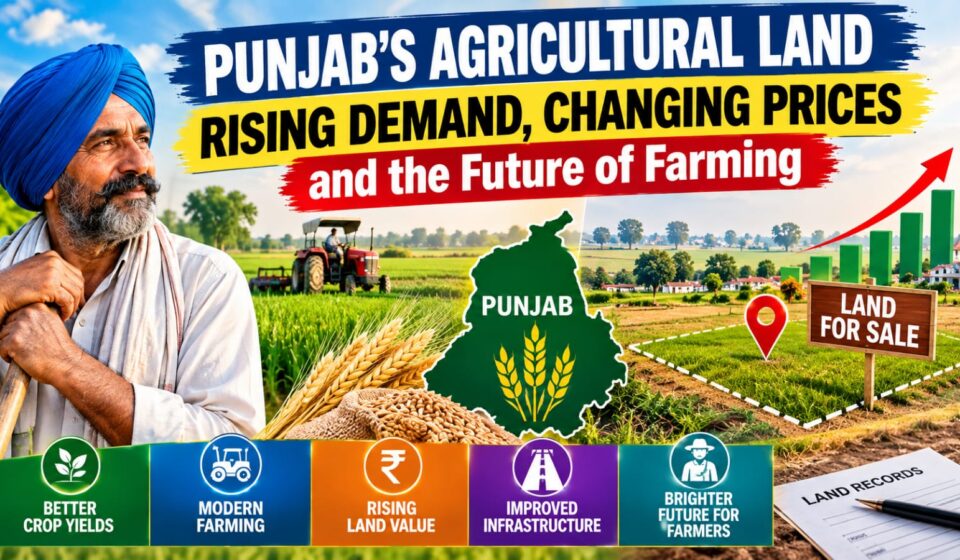
Suggested website headline: Punjab Agricultural Land: Rising Demand, Changing Prices and the Future of Farming
Source references: Punjab Agricultural University research, Punjab Budget Analysis 2026–27 and recent reports on Punjab’s agricultural economy.